
“The knowledge of the circumstances of which we must make use never exists in concentrated or integrated form, but solely as the dispersed bits of incomplete and frequently contradictory knowledge which all the separate individuals possess.”
— Friedrich Hayek, The Use of Knowledge in Society (1945)
TL;DR
The frontier AI firms are turning into something the modern economy has not seen in four hundred years: medieval-style guilds. Anthropic, OpenAI, Google DeepMind, SSI at the model frontier. Nvidia, TSMC, ASML, SK Hynix at the hardware stack. Apple, SpaceX, Anduril at the vertical edge. Closed bodies of cumulative know-how, organised around named masters and signature work, with apprenticeships, opaque pricing, and lineage. They are not turning into the frictionless agent marketplaces the discourse keeps promising. I think this is the right answer to the actual conditions of frontier AI work. The alternatives the discourse keeps offering, Coasean utopia on one side and techno-feudal dystopia on the other, are both unserious. The rest of this essay is what the form looks like, why it is returning, and where I stand on it.
On 19 May 2026, Andrej Karpathy joined Anthropic. One of the most independent operators in the field, free to do anything, chose to walk into someone else’s workshop. That is a guild move, not a hiring announcement.
The dominant view in AI strategy says the opposite should be happening. It says that as coordination costs fall, the firm dissolves into a marketplace. Anyone who has read a Coase paper can draw the curve. AI would finish the job. The market would replace the firm. Any decade now.
It is not happening. The reason is simple. A guild is not just a fancy word for a firm.
A firm hires for a wage and sells units at a price. A guild raises apprentices into masters and sells signed work to named patrons. A firm scales by adding people. A guild scales by training them, slowly, in the same building, under the master’s hand. A firm’s mark is its brand. A guild’s mark is the maker’s signature. The two are not the same thing.
The frontier labs are doing the guild’s work, not the firm’s. Their pricing is becoming a relationship, not a list. Their models have a feel. Their best people are not hired, they are raised. Their buildings are necessary. Their alumni networks already look like lineages.
The form is medieval. The form is the guild. The central artifact of the next decade is not the token, the API call, the agent, or the platform. It is the signed, complete, attributable work, made by a named master in a named workshop, worth what the maker says it is worth, because the maker is the only one who can make it.
I. The Form, Named Honestly
“People of the same trade seldom meet together, even for merriment and diversion, but the conversation ends in a conspiracy against the public, or in some contrivance to raise prices.”
— Adam Smith, The Wealth of Nations (1776)

Drop the LARP image first. A guild was not a quaint pre-modern artifact full of bearded artisans singing rounds. It was the most successful institution between household and state that any major civilisation produced before the modern firm. It was successful because it bundled.
A real guild was, all at once, the firm and the school and the union and the regulator and the religious community and the political faction. It set its own prices, its own quality, its own entry. It trained its own people, over seven to twelve years, by demonstration, in the master’s household. It enforced its own marks of authenticity. It elected, in many cities, the city government itself.
The cleanest case is the Florentine Arte della Lana of the fourteenth century. It controlled the wool trade across the Mediterranean. It elected nine of the city’s most powerful magistrates. It financed the construction of Florence Cathedral. It enforced quality standards on Florentine cloth from Bruges to Constantinople. When the Black Death halved the city in 1348, the guild survived. The form was more durable than any individual master.
The Worshipful Companies of London, the Murano glassmakers, the Augsburg silver houses, and the Ayyavole 500 trading guild that ran Chola external commerce from the ninth century to the fourteenth all ran on the same template.
Anglo-capitalism abolished this layer over four centuries. It replaced the bundle with two atomized things, the individual employee and the limited-liability firm, mediated by a single open market. For most of the industrial period this worked. Mass production didn’t need apprenticeship, didn’t need signature, didn’t need a master’s hand. The assembly line replaced the workshop. The MBA replaced the master. The brand replaced the mark. The agency contract replaced the lifetime household. For two hundred years the bundle stayed broken, because the production stack didn’t need it.
The production stack now needs it again. It needs it for the most valuable, and probably the last, piece of technology humans will ever create: AGI. The guild form is the right answer to that demand. We should be glad of that.
II. The Vasari Defense
“We can know more than we can tell.”
— Michael Polanyi, The Tacit Dimension (1966)

You might say: too much leaks for the guild thesis to hold. Papers are on arXiv. Llama weights are public. DeepSeek published its training methodology. Mistral open-sourced a frontier-class architecture for marketing. How can “closed knowledge” be the first pillar of anything if everything is leaking?
The objection works only if “closed knowledge” means “secret recipes.” It does not. It means closed systems of knowledge use. The cumulative culture of execution that cannot be put in a treatise.
The recipe leaks. The cuisine doesn’t. Call this the Vasari Defense.
The four-hundred-year-old version of this objection is the Italian Renaissance, and the answer to it is Giorgio Vasari. In 1550 Vasari published Lives of the Most Excellent Painters, Sculptors, and Architects, a thousand-page treatise documenting Renaissance technique in detail. Other treatises and pirated manuals followed across Europe. Apprentices travelled openly between workshops. Murano glassmakers were repeatedly stolen, exported, and sometimes assassinated by Venetian agents trying to recover the secret.
None of it mattered. The workshops of Raphael, Titian, and Michelangelo stayed unreproducible for centuries. Murano glass stayed Murano glass for four hundred years.
Why? Because the recipe is the least of what a workshop owns. The master’s eye, the apprentice’s hand, the cumulative tacit corrections after ten thousand failures, the patron’s social network, the supplier relationships, the materials calibrated to the local water and air, the rhythm of the year, the building itself. None of this travels with the paper. Vasari documented what Florence had already won. He did not transfer it.
The AI version is the same story, pillar by pillar. A Stradivari is a violin made in Cremona between roughly 1666 and 1737 by Antonio Stradivari and his sons. Their instruments are widely considered the finest ever made, and individual examples sell for tens of millions of dollars at auction. Stradivari blueprints are public. Modern luthiers with CNC machines and X-ray spectrometers cannot make a Strad. Llama weights are public, and the firms doing interesting things on top of Llama are not the firms that downloaded Llama. GRPO is public, and the labs that turn GRPO into a frontier model already had five years of post-training tradecraft that the paper does not describe. DeepSeek publishes R1 and V3 in detail because publishing is a near-zero-cost way to assert frontier status, win recruiting, win sovereign customers, and stake geopolitical position. The paper is the mark, not the manual. Multiple groups have tried to “DeepSeek-distill” and produced mid results, because the recipe is the least of what DeepSeek owns.
Open recipes don’t refute the guild thesis. They accelerate it. They strip out the firms whose only claim was algorithmic novelty and leave standing the firms with cumulative knowledge culture. Vasari did not destroy Florence. Vasari proved Florence had won.
III. 7 Features The Next Decade’s Firms Will Have
“The city is a fact in nature, like a cave, a run of mackerel or an ant-heap. But it is also a conscious work of art, and it holds within its communal framework many simpler and more personal forms of art.”
— Lewis Mumford, The Culture of Cities (1938)

A guild is recognisable by structural features, not by costume. Here are the 7 the AI firm-form is already showing, if you know where to look.
1. Apprenticeship over hiring
You don’t recruit researchers. You raise them.
The current frontier of AI is produced by a handful of named lineages running through every major lab. Geoff Hinton’s group at Toronto produced Ilya Sutskever, who co-founded OpenAI and now runs his own SSI. Pieter Abbeel and Sergey Levine at Berkeley trained the cohort that anchors most of the frontier (Abbeel’s student John Schulman co-founded OpenAI and wrote the PPO paper that made ChatGPT possible). Demis Hassabis came out of UCL and built DeepMind in the same image.
These are guild lineages in everything but the word. They produce masters who produce masters, in a specific building, over years, by demonstration.
Inside the labs the same pattern repeats. OpenAI’s residency program, DeepMind’s research engineer pipeline, the Anthropic interpretability team’s habit of growing senior researchers from new PhDs. These are not training programs in the corporate sense. They are apprenticeships. They are how tacit knowledge moves from one generation of practitioner to the next, in the same room, over years, by example.
The compensation arms race in the labs is the wrong battle to obsess over. The right one is whether a twenty-five-year-old who joins your lab in 2026 is a master by 2034.
If yes, you are a guild. If you are still poaching senior researchers from competitors in 2034, you are an HR department with good ping-pong.
The signal to watch is not which firms can hire the most expensive researcher from a rival lab. It is which firms have a recognisable internal lineage. The most important people on the most important projects were not hired in. They were raised in.
Anthropic is unusually deep on this dimension for a firm seven years old. OpenAI’s lineage has fragmented under churn, which is part of why its frontier output now reads more like a procurement organisation’s than a workshop’s. SSI is being built on the explicit theory that the master-apprentice relationship is the input the field has been losing.
2. Signature style as IP
Anthropic models feel like Anthropic models. Midjourney v6 has a house style. Pixar has a house style. So do A24, Hermès, Apple, Berghain, Loro Piana, Bottega Veneta under Daniel Lee, and Berkshire under Buffett.
The signature is not a marketing artefact. It is the only property that survives commoditisation. It cannot be reduced to a benchmark, copied from a paper, or exported with weights. Open weights leak architecture. They cannot leak taste. A guild’s mark is its margin.
The lab whose models all feel like every other lab’s models is the lab whose models will all be priced like every other lab’s models. The lab whose models feel like them, distinctive enough that a power user identifies them from the first paragraph, has a margin that survives every algorithmic generation. Anthropic understood this in 2022. Most labs still don’t.
3. Opaque pricing
Real guilds did not post prices. They negotiated by relationship, occasion, member status, and the patron’s other commitments.
A token-per-thousand pricing page is the AI industry’s equivalent of a commodity exchange. Useful for the bottom of the market, lethal for the top.
The transparent-token-price era is ending under the weight of its own contradictions. Enterprise rates, capacity reservations, custom contracts, sovereign deals, capability tiers, multi-year compute commitments, white-glove integrations. Pricing is becoming a relationship, not a list.
This is guild form returning under economic pressure that the API-pricing-page founders cannot articulate, because their entire business model assumed commodity uniformity.
4. Geographic concentration
A guild has a seat. Florence for one craft, Venice for another, Augsburg for a third. The AI guilds will look the same. SF for one kind of frontier work, Shenzhen for another, eventually Riyadh, Singapore, Abu Dhabi, perhaps Bangalore for specific verticals.
The remote-first, distributed-team mode is structurally guild-incompatible. It cannot reproduce tacit transfer at the rate the guild form requires. The building is not vanity. The building is the apprentice’s classroom.
Apple Park is a proto-monastery. Bell Labs was a guild hall. SpaceX Hawthorne is a workshop in the Renaissance sense, masters and apprentices sharing physical space, walking past each other’s work, smelling each other’s burns.
Your Notion-pilled remote-first competitor cannot produce a master, because masters require a building, and a building requires a seat, and a seat requires concentration. The map of the next decade’s AI is a map of physical addresses.
5. Self-regulation that the state ratifies
This pillar is the most legible. Look at what the frontier labs have actually been doing.
Anthropic published its Constitutional AI paper in December 2022, then a Responsible Scaling Policy in September 2023. The RSP is a set of capability thresholds and deployment commitments the lab binds itself to, revised in public, often amid internal arguments about what counts as a threshold and how to respond when one is crossed. The “constitution drama” inside the lab is not a PR problem. It is a guild deliberating its own bylaws.
OpenAI did the parallel work. Sam Altman testified to the US Senate in May 2023 asking for federal licensing of frontier models. The same month, Altman, Brockman, and Sutskever proposed an IAEA-for-AI. The Preparedness Framework followed in December.
The state pattern followed. Seven labs signed voluntary commitments at the White House in July 2023; eight more joined in September. The Bletchley Declaration (November 2023), Seoul (May 2024), and the Paris AI Action Summit (February 2025) built on text the labs had largely drafted. The UK and US AI Safety Institutes signed pre-deployment-access MOUs with Anthropic and OpenAI in August 2024. There is no clean precedent for any of this outside pharmaceuticals and nuclear materials.
Structurally, this is the Worshipful Company of Goldsmiths assaying gold for the Crown. The labs write the bylaws. The labs apply them to themselves first. The state codifies them as the public floor everyone else must meet. The EU AI Act is the end-point of the process.
Private order first, public ratification second. This is not regulatory capture. It is the natural order of an institution between household and state.
6. Internal household culture
A guild was a household scaled up. The master, the apprentices living above the workshop, the wife running supplies, the elders telling stories of three previous generations of masters, the patron saint over the door.
The next decade’s defensible AI firms are reproducing this form internally, whether they describe it that way or not. Anthropic’s small-batch hiring, single-building rhythm, internal model-spec governance, and refusal to grow at the pace the market suggests are household-form behaviours at firm scale. SpaceX’s cult-coded internal life, in-house everything, and multi-decade employees raised inside the firm are the same pattern.
The MBA-and-VC frameworks have no language for this. They call it “culture” and treat it as a soft variable that can be hired against. It is not soft. It is the load-bearing variable the soft ones are downstream of.
You cannot offsite your way into a guild. You inhabit it or you don’t have it.
7. Lineage and time horizon
A guild operates on a multi-generational time horizon. It makes decisions that only make sense at that horizon. Hermès does not chase quarters. Berkshire does not chase quarters. Apple does not chase quarters. Anthropic measurably does not chase quarters.
The quarterly-cadence firm is structurally incapable of the guild form. The guild form requires that the master’s investment in the apprentice pay off over decades, that the building’s amortisation pay off over centuries, that the brand’s mark pay off over generations.
Continuity is the time-shape of every other guild feature, and it is the time-shape the agent-stack startup, the SaaS aggregator, and the quarterly-public-company governance model are all structurally unable to produce.
Time horizon is not a strategy. It is a constraint that selects which strategies are even available.
IV. 3 Strategic Claims
“The whole acts as one market, not because any of its members survey the whole field, but because their limited individual fields of vision sufficiently overlap so that through many intermediaries the relevant information is communicated to all.”
— Friedrich Hayek, The Use of Knowledge in Society (1945)

A. Open recipes are the guild filter
The Vasari Defense, as strategy. When the algorithm is commodity, only the firms with cumulative knowledge culture above the recipe layer survive.
Llama being open hurts Llama-clone startups, not Anthropic. GRPO being public hurts the “we have a secret RL trick” pitch decks, not the labs with five years of post-training tradecraft.
Every open release is a filter. It strips out a layer of pretender firms whose only claim was the closed thing that just got opened. It concentrates margin in the firms whose claims were never about the recipe.
Contribute to open infrastructure freely. It does not weaken your guild. Your guild is what sits above.
B. Composability is loser preference
Whoever wants your component to be swappable is your competitor, not your customer. The MCP and agent-protocol crowd is selling composability because composability dissolves margin into protocol.
A guild’s product is not composable by design. It is a complete work, signed, attributable, dependent on its maker. The Stradivari is not a module in a modular violin stack. It is a whole instrument, made by a named man in a named workshop, worth what the maker said it was worth, because the maker was the only one who could make it.
The next decade’s most valuable AI artefacts will be the same shape. A frontier model with a feel. A domain agent with a specific operational record. A coding system with a discernible house style. All sold as whole works to named customers, not as commodity inputs into a generic protocol.
Operators who structure their offerings as composable components are doing the work of their competitors for free.
C. They do not benchmark. They assay.
MBA religion says: be transparent, be legible, be benchmarked. That optimises the firm for evaluation by outsiders.
Guilds are evaluated by peers and patrons. They do not benchmark. They assay. They test by relationship, in private, by someone who knows what the mark means.
Anthropic declining to disclose training methodology is not secrecy as defence. It is opacity as identity. The mark is meaningful precisely because outsiders cannot read it.
Every benchmark a lab chases is a small surrender of guild form. Benchmarks force the work to be legible to outsiders, and legibility to outsiders is the first step in commodification.
The labs that survive will benchmark when it is strategically cheap and refuse when it is strategically expensive. The same posture every Renaissance workshop took toward Vasari’s questionnaires.
V. Proto-Guilds In Plain Sight
“The first thing the intellect does with an object is to class it along with something else.”
— William James, The Principles of Psychology (1890)
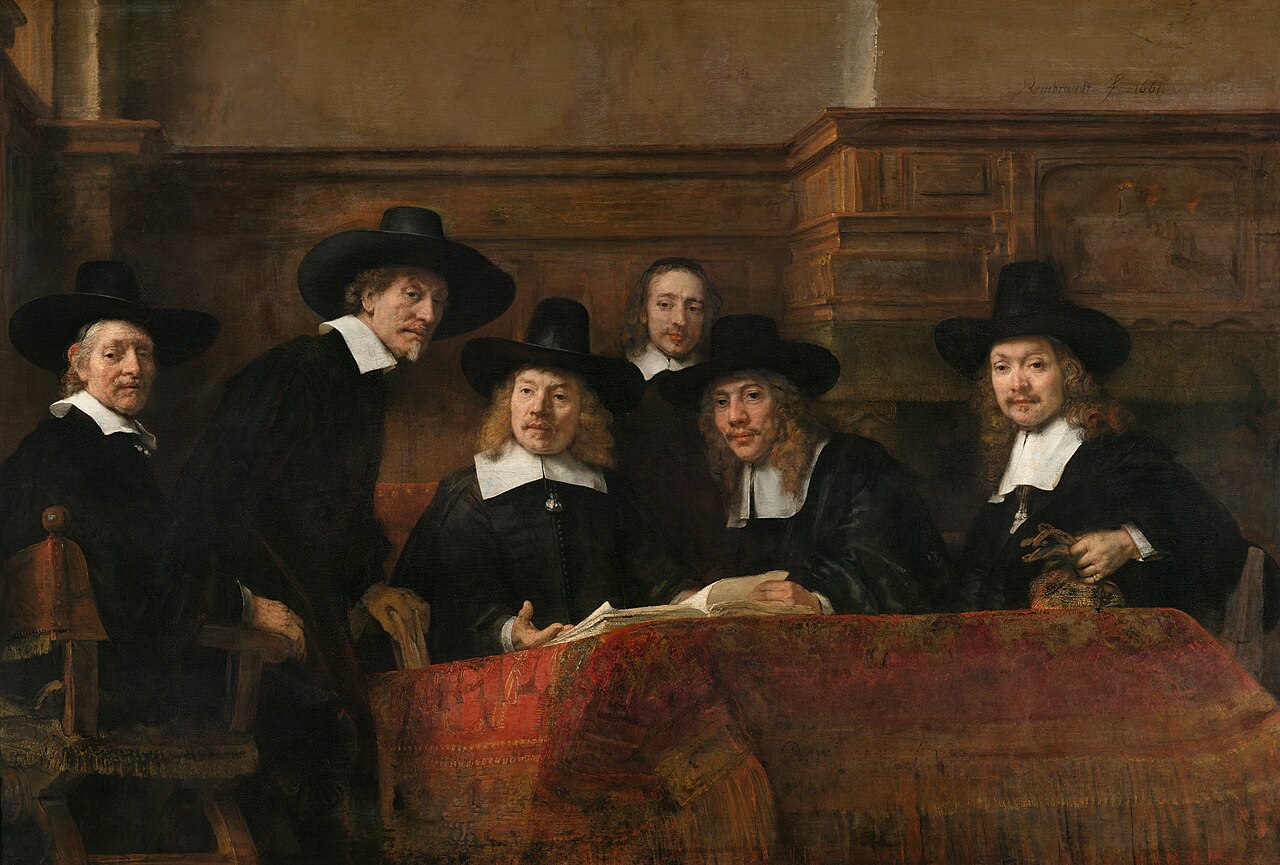
_van_het_Amsterdamse_lakenbereidersgilde_-_Google_Art_Project.jpg)
The useful exercise is to look at firms that already exhibit five or more of the seven features and notice that nobody calls them guilds, even though that is what they are.
Anthropic. Lineage-coded, small-batch hiring, single-building culture, model spec as bylaw, RSP as charter, refuses growth pacing, signature feel in the models. Six of seven. Arguably all seven if you count the alumni-network kinship.
Apple. Taste-coded, multi-decade apprenticeship system, signature aesthetic, geographic concentration in Cupertino, self-regulating governance, multi-generational continuity. Six of seven. Fails only on the open-research dimension because Apple doesn’t publish.
Hermès. Literal guild structure by historical inheritance. Multi-decade leather apprenticeship in Pantin. Refuses scale. Signature. House style. Patrimonial governance. Seven of seven.
A24. No franchises. House style. Refuses commodification. Signature is its product. Five of seven. Weak only on physical geography.
Anduril. Mission-coded, founder lineage from Palmer Luckey and Trae Stephens, refuses defense-prime mode, geographic seat in Costa Mesa, vertical integration, multi-decade time horizon implicit in the product roadmap. Six of seven.
Berkshire Hathaway. Buffett to Abel succession is hereditary in everything but blood. No committees. Capital allocation as taste. Multi-generational time horizon. Five of seven. Fails on geographic concentration only because the holdings are dispersed by design.
SpaceX. Cult-coded, in-house everything, signature engineering style, geographic seat in Hawthorne and Boca Chica, multi-decade time horizon, lineage transfer from Musk through Shotwell and the early team. Six of seven.
The pattern is not Western or Anglo. It is global, and it is most legible in the firms that own the AI hardware stack itself.
TSMC. Hsinchu Science Park as the seat. Process-node mastery as the signature (N3, N5, N4P are global referents). Sovereign-grade custom pricing to each named customer (Apple, Nvidia, AMD). Multi-decade engineer retention. Thirty-year fab-planning horizons. Morris Chang’s founder culture still legible across the firm. Seven of seven.
ASML. Veldhoven as the seat. EUV lithography as the signature monopoly: no one else on Earth can build the machines. Each machine sold under custom contract, with delivery slots assigned by state-coordinated allocation. Decade-long machine development cycles. Tight Dutch engineering apprenticeship culture. Seven of seven.
SK Hynix. Icheon as the seat. High-bandwidth memory (HBM) as the signature: the lab-grade memory every frontier AI lab now depends on. Chaebol-style patrimonial governance and multi-generational lineage. Six of seven.
Each is halfway into guild form and pretending it is still doing market capitalism. The white paper’s job is partly to name what they already are, so the next cohort of firms can build toward it deliberately instead of stumbling into it.
VI. One Counter-Example, By Way Of Warning
“Pride goeth before destruction, and an haughty spirit before a fall.”
— Proverbs 16:18, King James Version

Stability AI is the anti-Vasari. In 2022 it sat at the absolute centre of the open-source AI moment. It released Stable Diffusion. The model became, by download count, the most diffused generative model in the world. Three years later Stability had no signature, no opaque pricing, no apprenticeship culture, no geographic seat, no internal household, no defensible product. It scored zero of seven. By 2024 its founder had resigned amid financial collapse, and Robin Rombach, Andreas Blattmann, and the CompVis team from Heidelberg who actually built Stable Diffusion had walked out to found Black Forest Labs, where they are now rebuilding the same craft inside the guild form. Stability had given the world the recipe and forgotten to be a workshop. Vasari published Florence’s techniques and Florence kept winning. Stability published its techniques and Stability lost. The recipe alone is never enough. The cuisine is the firm.
VII. Objections, Dispatched
“The wise man does not expose himself needlessly to danger, since there are few things for which he cares sufficiently; but he is willing, in great crises, to give even his life, knowing that under certain conditions it is not worthwhile to live.”
— Aristotle, Nicomachean Ethics (c. 350 BCE)

This is a strong thesis. It invites objections. Let me take the four that come up most, one at a time.
“Guilds suppress innovation.” The opposite. Venetian glass, Florentine fresco, Sheffield steel, Toledo blades. Every one reached its technical peak under guild conditions. Innovation needs masters. Masters need apprentices. Apprentices need the guild. The Enlightenment story that guilds were anti-progress is propaganda. It was written by bourgeois interests who wanted skilled-labour charters revoked so they could replace skilled work with cheap work. That is politics, not economics.
“Guilds are anti-meritocratic.” Guilds were competence-meritocratic, not credential-meritocratic. The test was the journeyman’s masterpiece. You produced a complete original work, in front of peer judges, at a quality level the guild would defend in public. There was no LSAT for being able to make a chair. There was no PhD for being able to cast a bronze. The guild selected for being able to make the thing, not for being able to be tested on a proxy for the thing.
“Guilds were destroyed by industrialisation.” Correct. Mechanisation collapsed the apprenticeship-to-output ratio. When a factory could produce in a day what a master workshop produced in a year, tacit knowledge stopped being the bottleneck. Capital and energy became the bottleneck. Under AI the ratio reverses. The bottleneck is tacit human capital again. Taste, judgement, lineage, signature, customer relationship. Only the guild form can reproduce these. The conditions that destroyed guilds are the conditions AI is now undoing.
“Open recipes prove knowledge is fungible.” See the Vasari Defense. Recipes are not cuisines, papers are marks not manuals, and open infrastructure accelerates the guild filter rather than dissolving it.
VIII. Political Economy, Patrimonial Not Liberal
“The movement of the progressive societies has hitherto been a movement from Status to Contract.”
— Henry Sumner Maine, Ancient Law (1861)
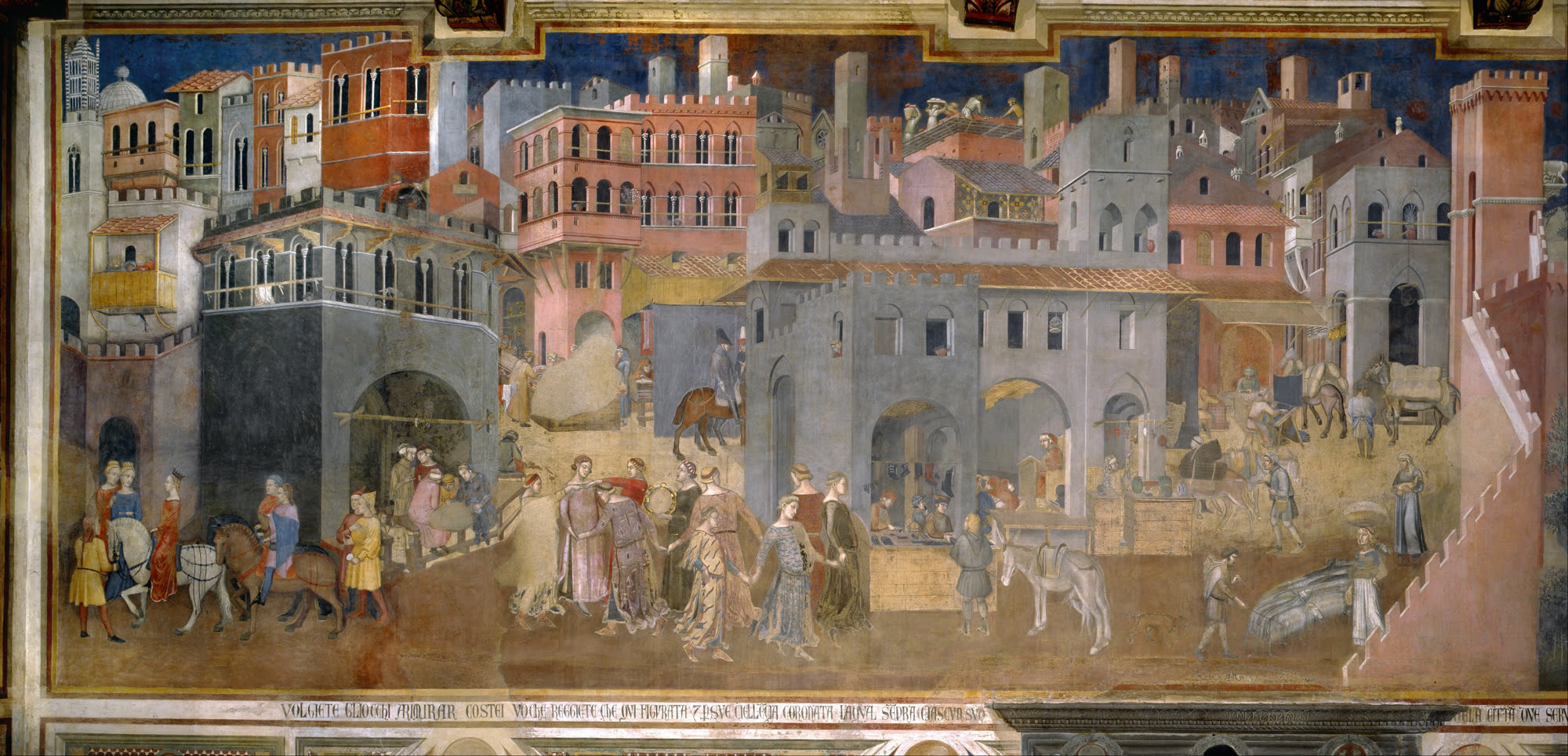

Guild form is what civilisations converge on when production requires both tacit knowledge and trust at scale. This is the line I want to defend. It has held wherever long-cycle craft has had to happen. It is not parochial. It is not nostalgic. And in my reading it is historically optimal: the institutional form that best matches the conditions a serious civilisation has to build under.
Maine described the great motion of the nineteenth century. The twenty-first is reversing it.
Liberal capitalism assumes three things. Atomised individuals making free choices. Transparent markets clearing on price. A state whose role is enforcement of contracts and disclosure rules.
Guild capitalism assumes the opposite of all three. Closed bodies of mutual obligation. Opaque markets clearing on relationship and reputation. A state that operates as the guild’s partner rather than its regulator.
These are not minor variants of each other. They are different political economies.
The historical analogue is not the Anglo-American market liberalism that ran from roughly 1850 to 2010. It is the older, patrimonial-mercantile order. The Italian city-states. The Hanseatic League of northern Europe. The Edo-period Japanese han. The shreni corporations of medieval South India.
In each of these, the firm and the city and the household were continuous, not separate. Capital was patrimonial. Held by named families, transferred by lineage, deployed over long cycles. Markets cleared by relationship more than by price. The state was a participant, often elected by the guilds themselves.
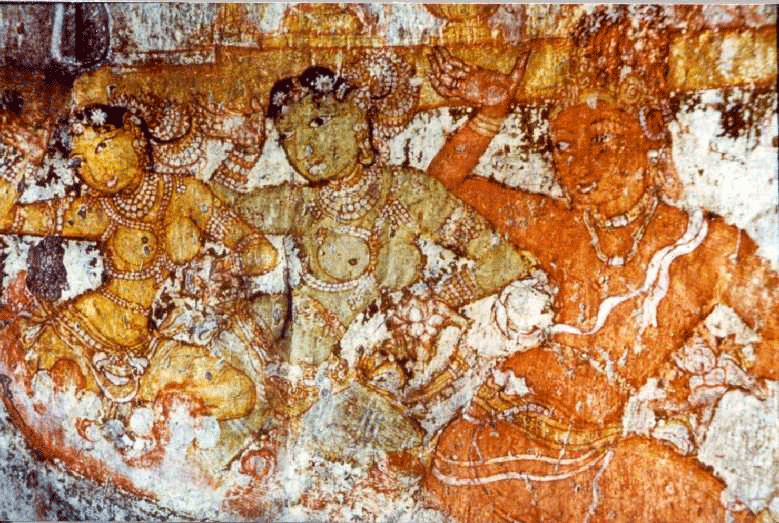

The Indian case is the proof that the form is not parochial. The shreni corporations of Kautilya’s Arthashastra (4th century BCE) were treated as legal persons a thousand years before Anglo common law learned the trick. The Ayyavole 500 ran continuous trade across South India and Southeast Asia for five hundred years. The guild is the institutional grammar of long-cycle craft, wherever long-cycle craft has had to happen.
This is the political economy the US tech industry is two-thirds inside and refusing to name.
Naming it is uncomfortable. First, it concedes that the post-1945 liberal-market story is over. Operators with mortgages prefer not to say that in board decks. Second, the moment you name it, the American left calls it neo-feudalism and the American right reaches for slogans. Neither vocabulary fits.
The right vocabulary is older and pre-political. City-state. League. Han. Zunft. Arte. Shreni. Worshipful Company. Use these words on purpose, because they describe what is happening and because they don’t carry a partisan charge.
The motion from status to contract is over.
The motion now is from contract back to form. Not the same status the nineteenth century broke out of, but a richer one. Lineage, mark, mutual obligation, signature, building, patron.
Maine’s arrow has reversed. Most people have not noticed.
IX. Hayek’s Edge
“Society is indeed a contract… It is a partnership in all science; a partnership in all art; a partnership in every virtue, and in all perfection. As the ends of such a partnership cannot be obtained in many generations, it becomes a partnership not only between those who are living, but between those who are living, those who are dead, and those who are to be born.”
— Edmund Burke, Reflections on the Revolution in France (1790)
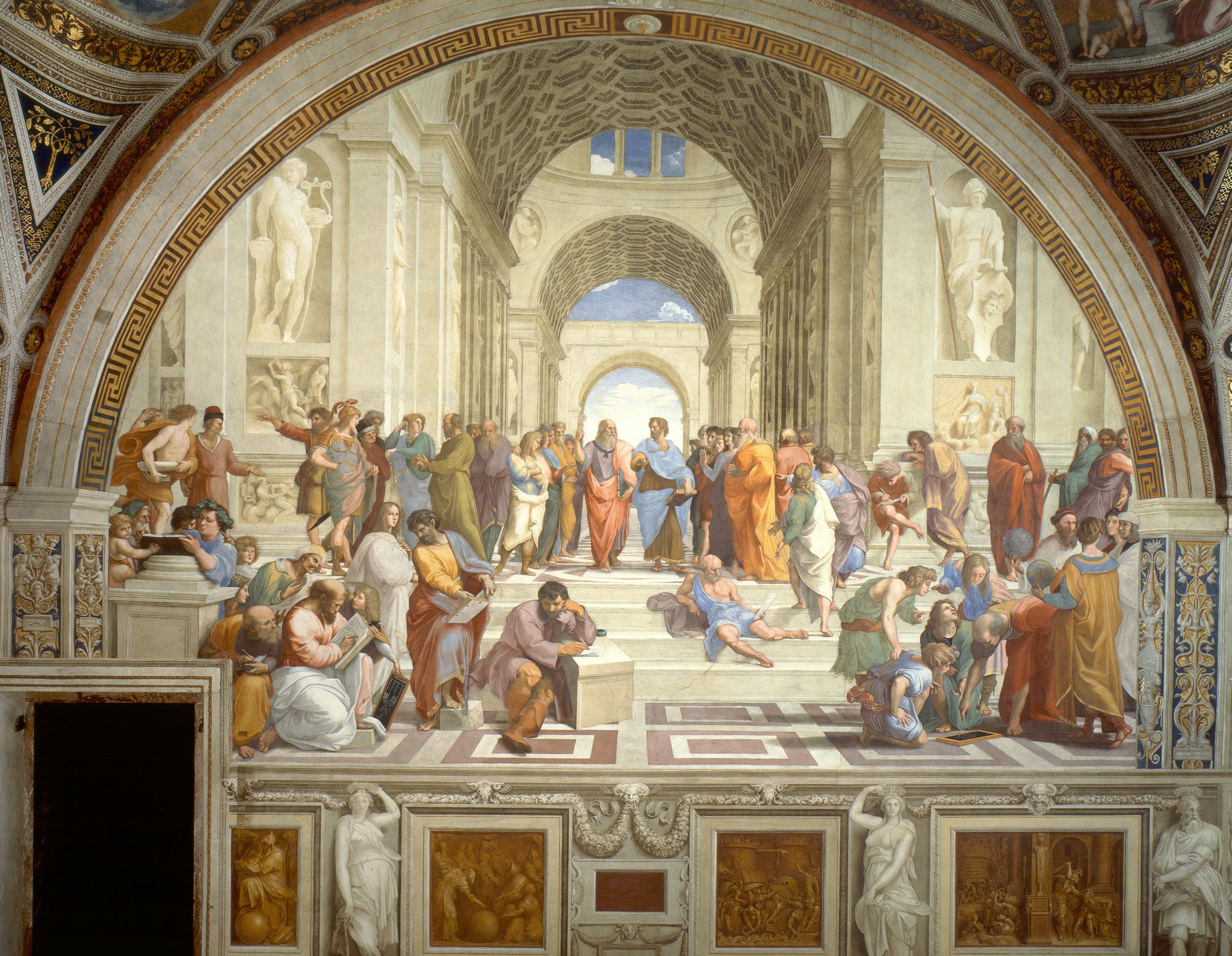

Soren Larson has argued that Hayek won, and that AI accelerates the clustering by pushing capability to the edge, into specific contexts, into specific operational settings where general models become situated ones. Larson’s essays on the Coasean Singularity, cybernetic arbitrage, and vertical integration sit below this essay’s argument. Larson stops at the firm. The guild thesis completes the argument by naming the institutional form the edge actually has.
The edge is where the masters live. The masters live in a guild. Hayek does not predict atomized agents transacting in a frictionless marketplace. He predicts that knowledge clusters where it can be used, and use requires people who know each other, who have worked together for years, who share a building, a mark, a patron, a lineage. The guild is the institutional form Hayek’s argument actually points at, even though Hayek himself was too liberal to draw the picture. The picture is medieval, and it is also, now, contemporary. Florence in 1450 and San Francisco in 2030 are running the same operating system on different hardware.
X. Where I Stand, And What This Means For You
“The old world is dying, and the new world struggles to be born; now is the time of monsters.”
— Antonio Gramsci, Prison Notebooks (1929–35)

I should say where I land on this. I am not neutral.
The guild form is, in my reading, the serious answer to the actual conditions of frontier AI work. The agent-marketplace future the discourse keeps promising is the unserious one. It treats human capital and tacit knowledge as inputs to be cheaped out. It underestimates how much of what actually matters cannot be put in a protocol.
The two loud alternative readings are also wrong. The American left’s “techno-feudalism” critique reads the same facts and concludes we are watching a moral catastrophe. The Coasean-marketplace right reads them and concludes we are watching utopia arrive. Neither fits.
What is actually returning is older than both, and better suited to what production at the frontier requires. We should build toward the guild form on purpose, not stumble into it while the discourse looks the wrong way.
If you are an operator at a frontier lab. Your firm is already two-thirds inside guild form. Your investors are pretending otherwise. The single most valuable thing you can do over the next twenty-four months is name what you actually are, and start governing accordingly.
Not “we are a startup” governance. Not “we are a public company” governance. Guild governance. Write the bylaws. Set the mark. Defend the lineage. Refuse the growth pacing. Build the building.
The labs that survive 2030 will be the ones that did this on purpose. The ones that survived 2025 by accident.
If you are a founder building on top of agents. Stop selling composable components. Composable is what your competitor wants you to be. Sell whole works. Sign them. Make them attributable. Make them dependent on you. The model wrapper category is the loser category of this decade. The signed-house-style-with-an-operational-record category is the winner. Pick.
If you are a researcher choosing where to work. The salary delta between labs has stopped being the load-bearing variable. The lineage delta is. Where will you be raised? Whose hand will train yours? Whose mark will you eventually carry? These were the questions every Florentine painter answered in 1480. They are the questions every researcher should answer in 2026, and most won’t, because the discourse is still teaching them to optimize for comp.
If you are a sovereign, or work for one. The frontier labs are guilds. They are writing the bylaws. Your only real choice is whether you ratify their bylaws, build a parallel guild on your own soil, or absorb the bylaws of the foreign guild as your public floor. There is no fourth option. The countries that figure this out fastest will run the next century.
If you are everyone else. The thing being built is not a faster Google. It is not a smarter Excel. It is not even a new platform. It is a new institutional form, sitting between the household and the city-state, the first such new form in roughly four hundred years.
It will reshape what employment means, what citizenship means, what professional identity means, what loyalty means.
The Anglo settlement of atomised individuals plus open markets plus a neutral state is the period your grandchildren will study as a brief interregnum between two ages of form. Live like you noticed.
Coase did not win. Hayek did not win the way the liberals read him.
The guild won.
The cuisine is the firm.